
The lesson
Read each section in order, work through every example on paper, then use the practice problems and quick check at the bottom.
Rates vs. unit rates
A rate compares two different units, like miles and hours. A unit rate tells you the amount for just one - like miles per ONE hour, or dollars per ONE item.
Finding a unit rate
Write the rate as a fraction, then divide the top number by the bottom number.
- 1Write the rate as a fraction (first quantity over second).
- 2Divide the top by the bottom.
- 3The result is the amount per 1 unit.
A car drives 180 miles in 3 hours. Find the speed per hour.
- 1Rate: 180 miles / 3 hours.
- 2180 ÷ 3 = 60.
- 3Unit rate: 60 miles per hour.
Why this matters
How much for just ONE - speed, price per item, and more.
These ideas show up on homework, quizzes, and the next unit in this grade. Getting comfortable here saves time later when the problems stack more steps together.
Common mistakes to avoid
Reversing the order named in the problem. Write the ratio in the same order the words give you.
Treating a part-to-part ratio like a part-to-whole fraction without checking what the whole is.
Key ideas from this lesson
- Rates vs. unit rates
- Finding a unit rate
- Write the rate as a fraction (first quantity over second).
- Divide the top by the bottom.
- The result is the amount per 1 unit.
Video walkthroughs
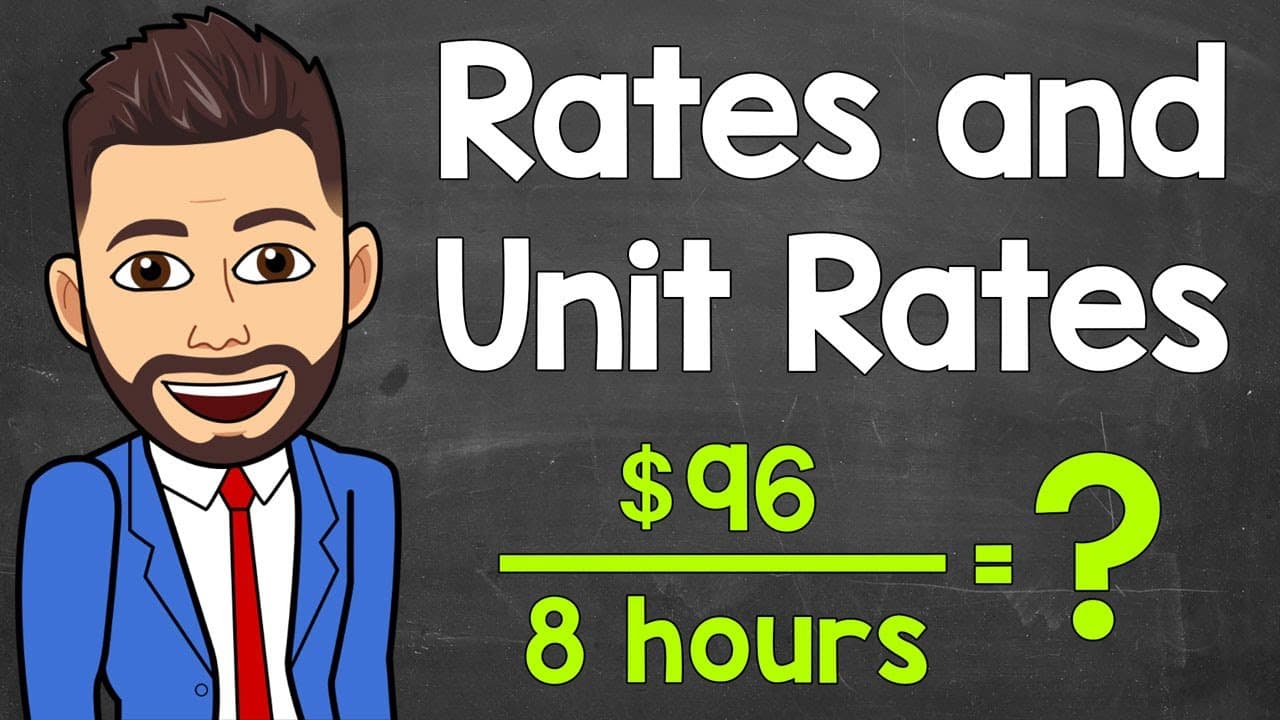
Rates and Unit Rates (extra examples)
More practice turning a rate into a unit rate.
Watch on YouTube
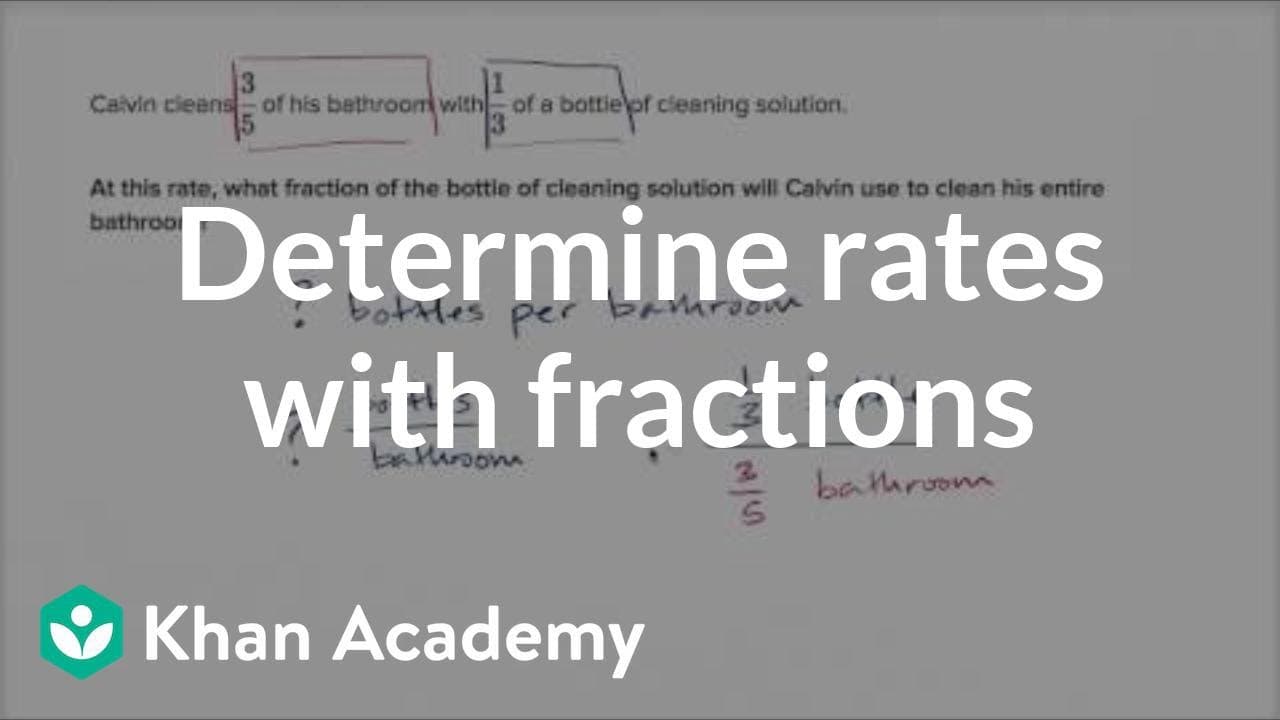
Determining Rates with Fractions
Compute a unit rate when the rate involves fractions.
Watch on YouTubePractice
For each problem: write your work in the box, type your answer, and check it. If you are stuck, reveal the solution one step at a time. Do not skip straight to the final answer.
Exercise 1
Try it yourselfA runner goes 10 miles in 2 hours. What is the unit rate in miles per hour?
Step-by-step solution
- 1Write the rate: 10 miles / 2 hours.
- 2Divide: 10 ÷ 2 = 5.
- 3The unit rate is 5 miles per hour.
Exercise 2
Try it yourself6 oranges cost $4.50. What is the cost per orange?
Step-by-step solution
- 1Unit rate: $4.50 ÷ 6 = $0.75 per orange.
Exercise 3
Try it yourselfA printer makes 240 pages in 8 minutes. How many pages per minute?
Step-by-step solution
- 1240 ÷ 8 = 30 pages per minute.
Exercise 4
Try it yourselfStore A sells 5 notebooks for $6. Store B sells 8 notebooks for $9.60. Which store has the better unit price?
Step-by-step solution
- 1Store A: $6 ÷ 5 = $1.20 per notebook.
- 2Store B: $9.60 ÷ 8 = $1.20 per notebook.
- 3The unit prices are the same.
Exercise 5
Try it yourselfA car uses 14 gallons of gas to drive 392 miles. How far can it drive on 1 gallon?
Step-by-step solution
- 1Unit rate: 392 ÷ 14 = 28 miles per gallon.
Worksheet - Ratios & proportions
Mixed practice across ratios, rates, and proportions.
Quick check
Answer all questions. Retake the quiz until you feel confident before moving on.
Unit Rates
Question 1 of 4
A car drives 180 miles in 3 hours. What is the unit rate in miles per hour?