
The lesson
Read each section in order, work through every example on paper, then use the practice problems and quick check at the bottom.
Dilations resize
A dilation multiplies the distance of each point from the center by the scale factor. Scale factor > 1 enlarges; between 0 and 1 shrinks.
Similar figures
Similar figures have equal corresponding angles and proportional corresponding sides. A dilation always produces a figure similar to the original.
A point is at (4, 6). Dilate by a scale factor of 1/2 centered at the origin.
- 1Multiply each coordinate by 1/2.
- 2New point: (2, 3).
Why this matters
Resize figures by a scale factor to make similar shapes.
These ideas show up on homework, quizzes, and the next unit in this grade. Getting comfortable here saves time later when the problems stack more steps together.
Common mistakes to avoid
Picking GCF when the problem asks for LCM, or the other way around. Check whether you need the biggest shared factor or the next time both counts line up.
Assuming the LCM is always the product of the two numbers. That only works when the numbers share no factors besides 1.
Skipping 1 when you list factors. Every whole number has 1 as a factor.
Key ideas from this lesson
- Dilations resize
- Similar figures
Video walkthroughs
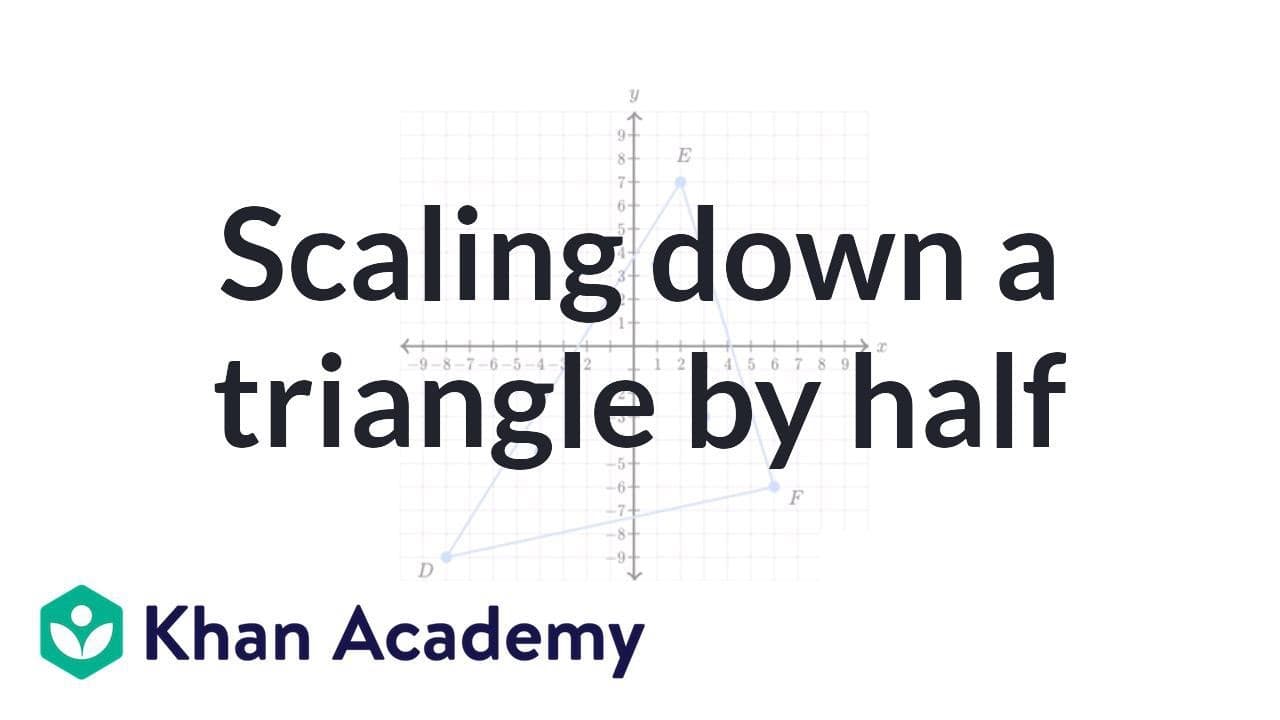
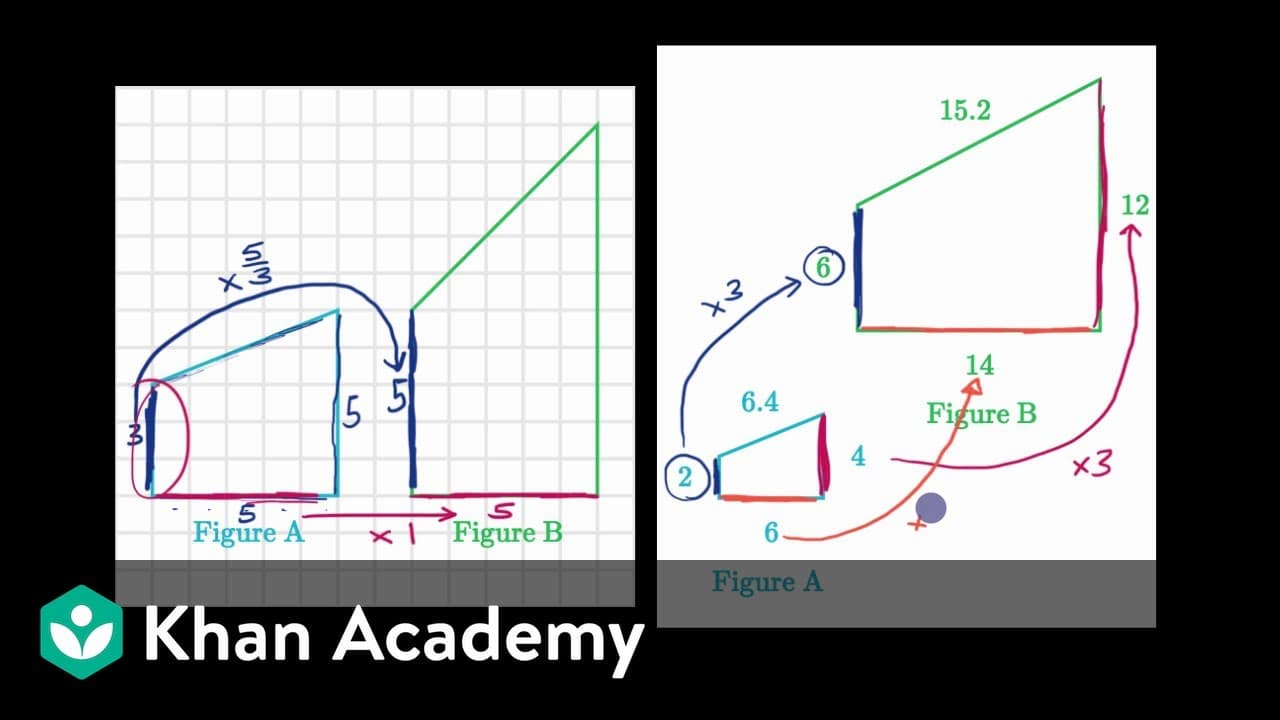
Identifying Scaled Copies
Verify two figures are similar using scale factors.
Watch on YouTube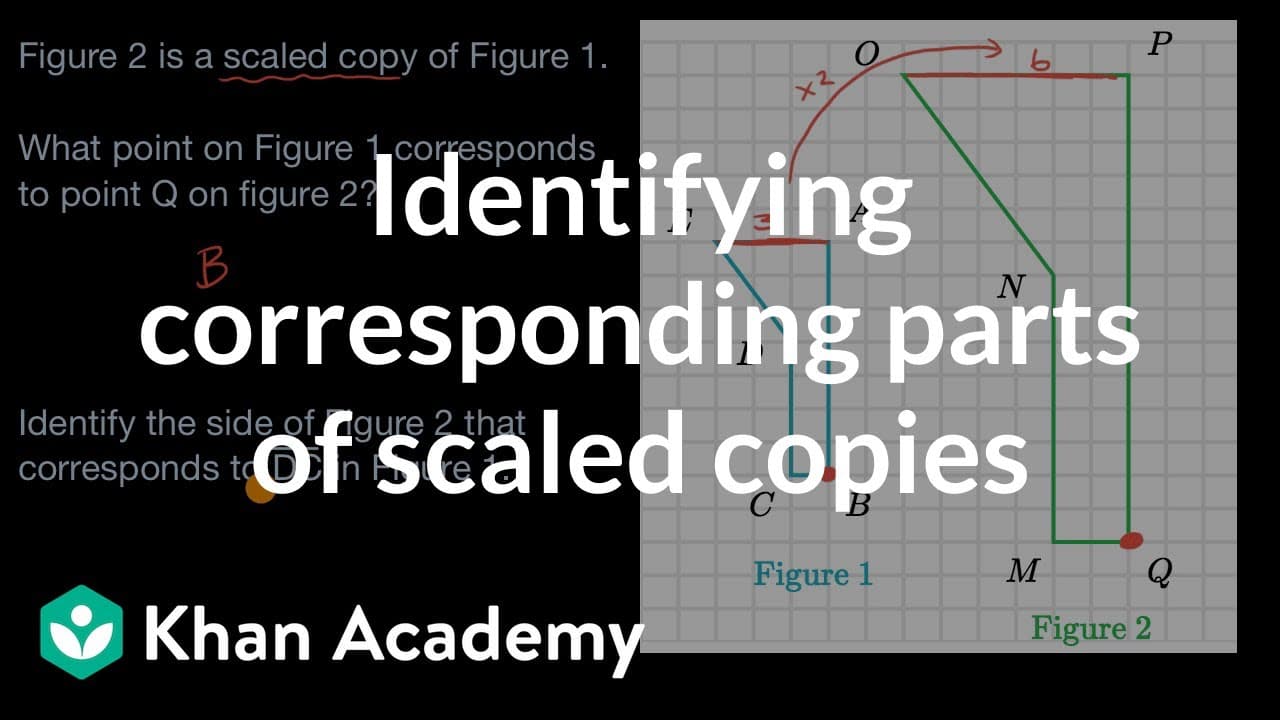
Corresponding Parts of Scaled Copies
Find matching sides and angles in dilated figures.
Watch on YouTube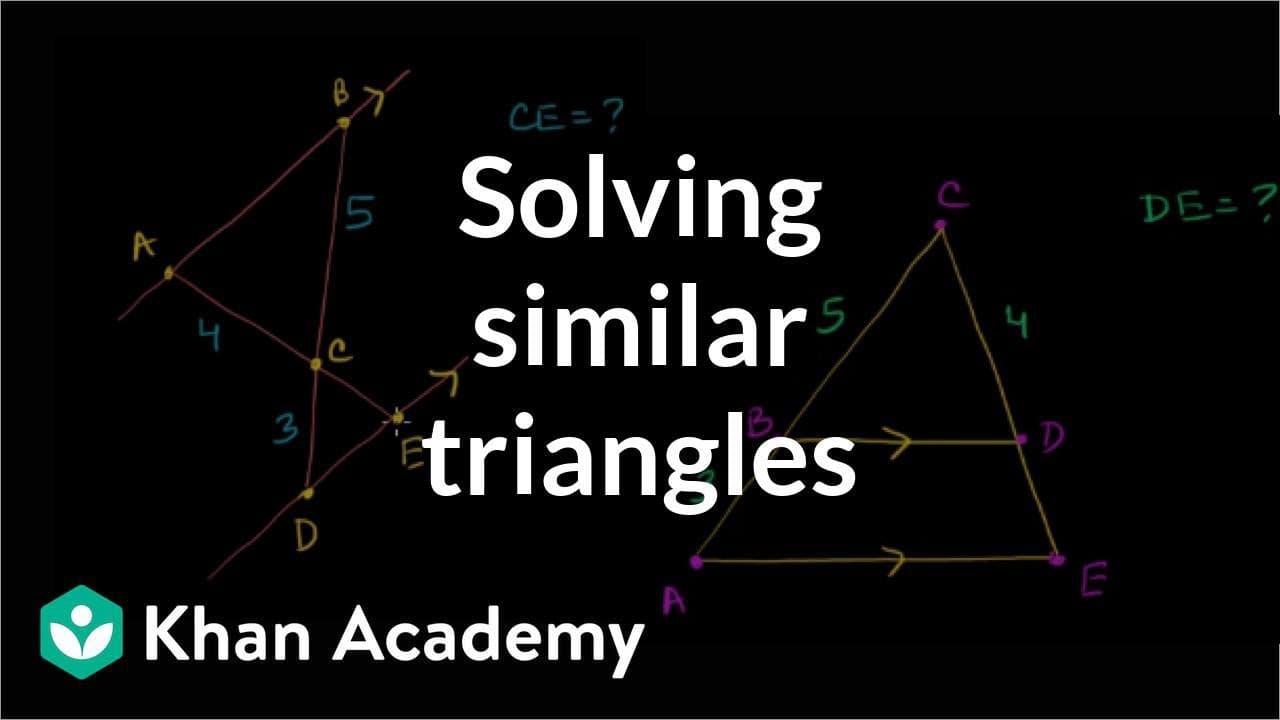
Similarity Example Problems
Use proportions to find missing sides in similar shapes.
Watch on YouTubePractice
For each problem: write your work in the box, type your answer, and check it. If you are stuck, reveal the solution one step at a time. Do not skip straight to the final answer.
Exercise 1
Try it yourselfDilate (6, 8) by scale factor 1/2 from the origin.
Step-by-step solution
- 1x: 6 × 1/2 = 3.
- 2y: 8 × 1/2 = 4.
- 3Image: (3, 4).
Exercise 2
Try it yourselfDilate (2, 5) by scale factor 3 from the origin.
Step-by-step solution
- 1x: 2 × 3 = 6.
- 2y: 5 × 3 = 15.
- 3Image: (6, 15).
Exercise 3
Try it yourselfA segment has length 12. After a dilation with scale factor 2/3, what is its length?
Step-by-step solution
- 1New length = 12 × (2/3).
- 212 × 2/3 = 8.
- 3The image segment is 8 units long.
Exercise 4
Try it yourselfTwo triangles have matching angles of 40°, 60°, and 80°. Are they necessarily similar?
Step-by-step solution
- 1All three pairs of corresponding angles are equal.
- 2AA (angle-angle) similarity applies.
- 3Yes, the triangles are similar.
Exercise 5
Try it yourselfRectangle A has sides 4 and 6. Rectangle B has sides 10 and 15. Is B a dilation of A?
Step-by-step solution
- 1Ratio 10/4 = 2.5 and 15/6 = 2.5.
- 2Same scale factor for both dimensions.
- 3Yes, B is a dilation of A with scale factor 2.5.
Quick check
Answer all questions. Retake the quiz until you feel confident before moving on.
Dilations & Similarity
Question 1 of 4
Dilate (10, 4) by a scale factor of 1/2 from the origin. What is the image?