
The lesson
Read each section in order, work through every example on paper, then use the practice problems and quick check at the bottom.
What a scale factor does
A scale factor tells you how many times bigger or smaller a drawing is than the real thing. A factor of 2 doubles every length; a factor of 0.1 shrinks everything to a tenth.
A map uses a scale of 1 cm : 50 km. Two cities are 4 cm apart on the map. How far apart are they really?
- 1Each cm represents 50 km.
- 24 cm × 50 km/cm = 200 km.
Why this matters
Use a scale factor to relate a drawing to the real object.
These ideas show up on homework, quizzes, and the next unit in this grade. Getting comfortable here saves time later when the problems stack more steps together.
Common mistakes to avoid
Picking GCF when the problem asks for LCM, or the other way around. Check whether you need the biggest shared factor or the next time both counts line up.
Assuming the LCM is always the product of the two numbers. That only works when the numbers share no factors besides 1.
Skipping 1 when you list factors. Every whole number has 1 as a factor.
Key ideas from this lesson
- What a scale factor does
Video walkthroughs
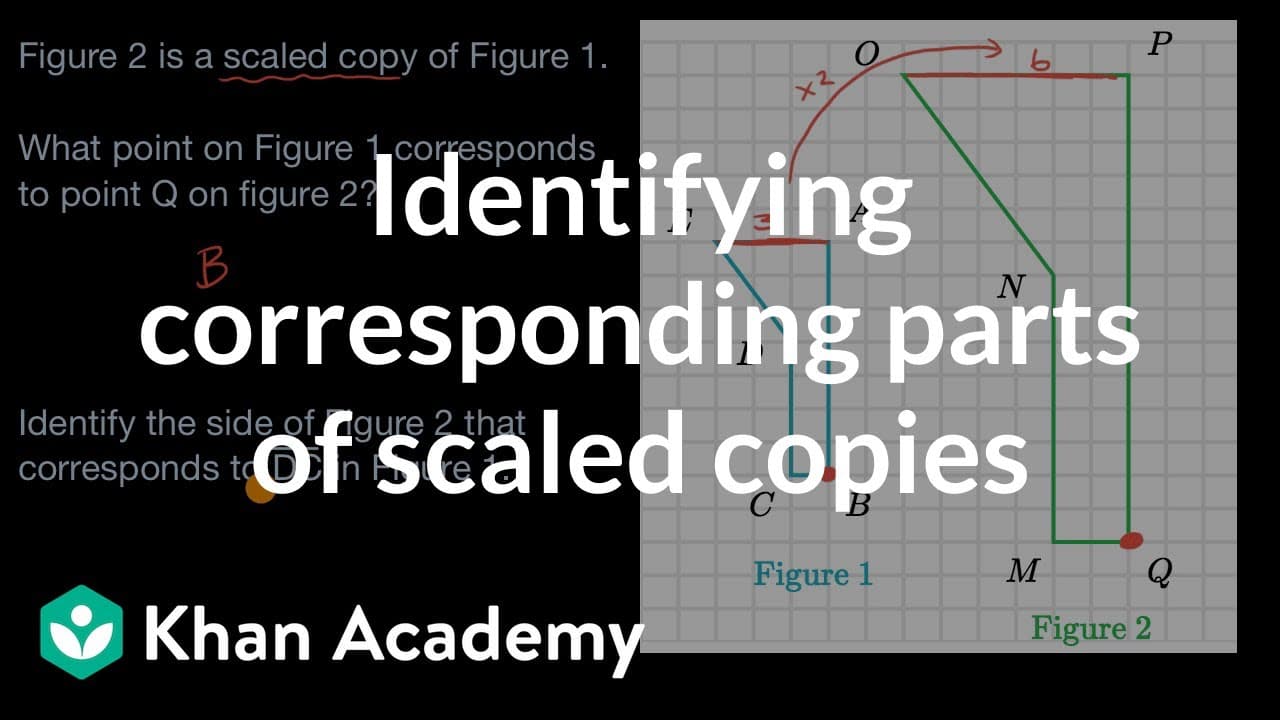
Corresponding Parts of Scaled Copies
Identify matching sides and find the scale factor.
Watch on YouTube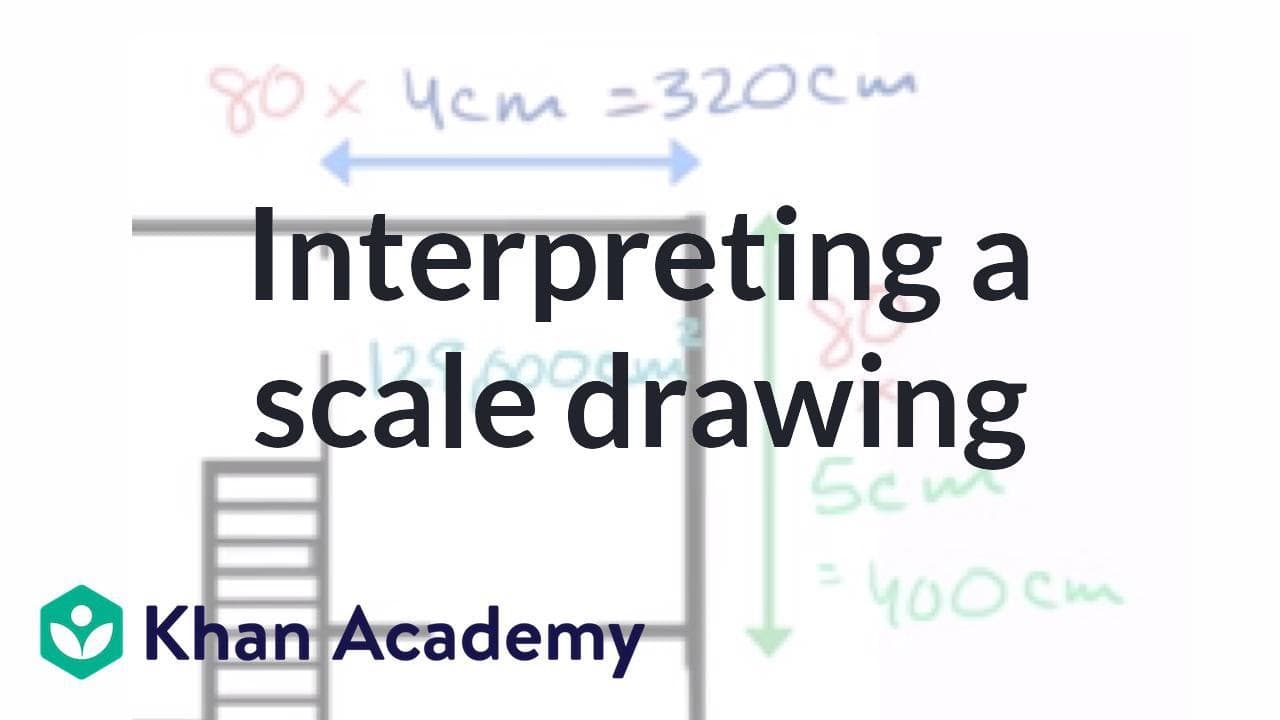
Interpreting a Scale Drawing
Use a scale to convert drawing lengths to real lengths.
Watch on YouTube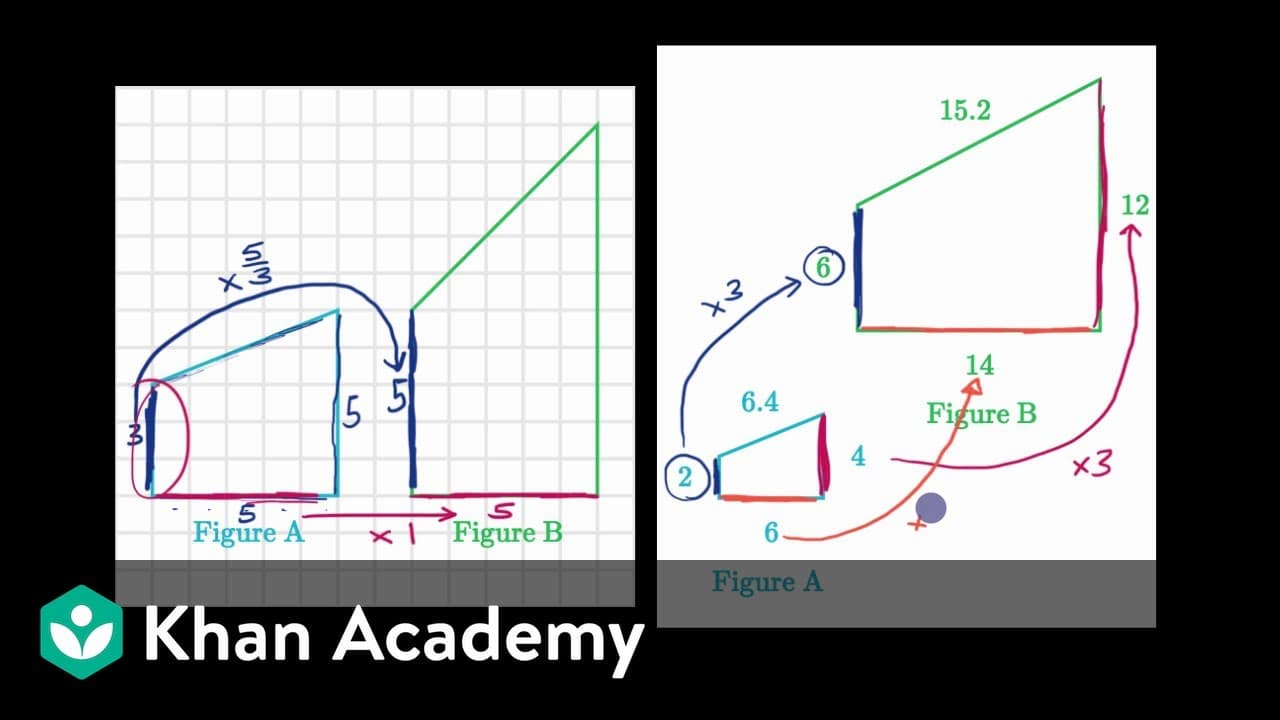
Identifying Scaled Copies
Decide whether two figures are scaled versions of each other.
Watch on YouTube
Practice
For each problem: write your work in the box, type your answer, and check it. If you are stuck, reveal the solution one step at a time. Do not skip straight to the final answer.
Exercise 1
Try it yourselfA map scale is 1 cm : 25 km. Two towns are 6 cm apart on the map. How far apart are they in real life?
Step-by-step solution
- 1Each cm represents 25 km.
- 26 × 25 = 150 km.
Exercise 2
Try it yourselfA room is 12 ft wide in real life. On a drawing with scale 1 in : 4 ft, how wide is the room on the drawing?
Step-by-step solution
- 1Drawing length = real length ÷ scale factor per inch.
- 212 ÷ 4 = 3 inches.
Exercise 3
Try it yourselfA model car uses scale 1 : 20. The model is 9 in long. How long is the actual car in inches?
Step-by-step solution
- 1Each inch on the model represents 20 inches on the car.
- 29 × 20 = 180 inches.
Exercise 4
Try it yourselfA square patio is 8 m on a side. A scale drawing uses 1 cm : 2 m. What is the area of the patio on the drawing in cm²?
Step-by-step solution
- 1Drawing side: 8 ÷ 2 = 4 cm.
- 2Drawing area: 4 × 4 = 16 cm².
Exercise 5
Try it yourselfTwo rectangles are similar. The smaller has sides 3 cm and 5 cm; the larger corresponding side to 3 cm is 12 cm. Find the other side of the larger rectangle.
Step-by-step solution
- 1Scale factor: 12 ÷ 3 = 4.
- 2Other side: 5 × 4 = 20 cm.
Quick check
Answer all questions. Retake the quiz until you feel confident before moving on.
Scale Drawings
Question 1 of 4
A scale is 1 in : 8 ft. A wall is 3 in long on the drawing. How long is it in real life?