
The lesson
Read each section in order, work through every example on paper, then use the practice problems and quick check at the bottom.
Three common displays
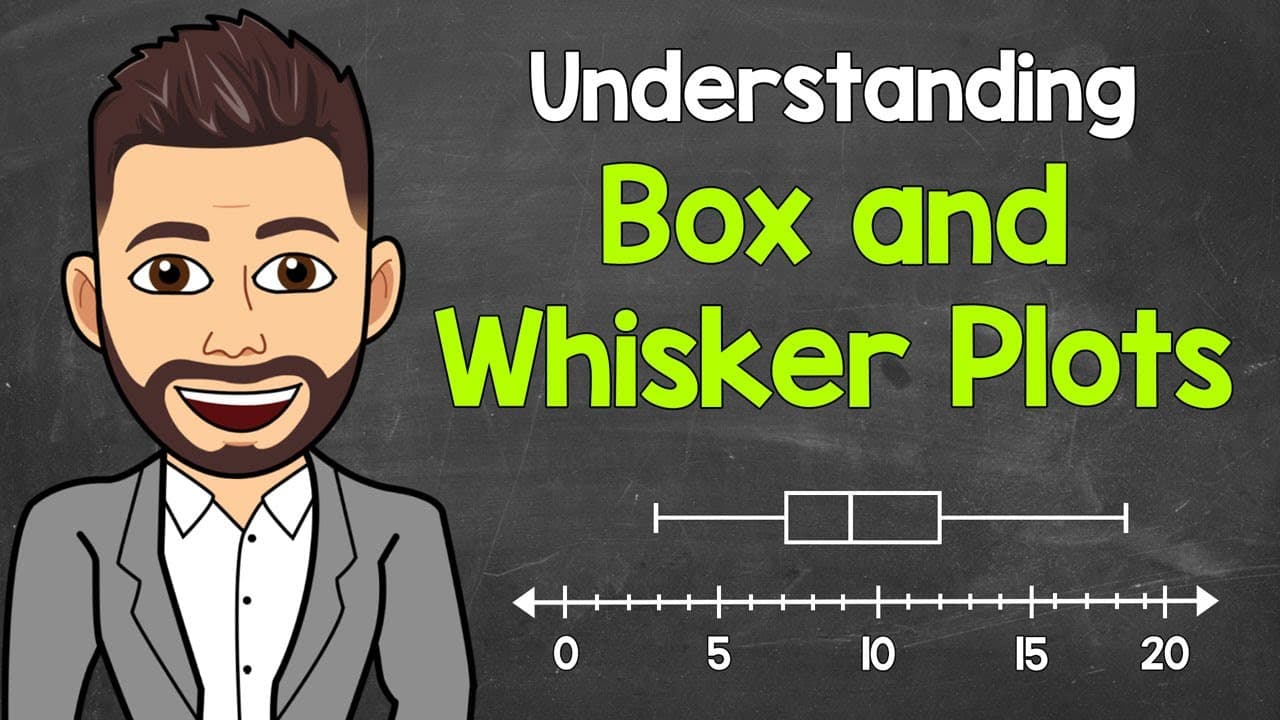
A dot plot shows every single value, so it's best for small data sets. A histogram groups numeric data into ranges (bins), which works well for larger sets. A box plot summarizes data with five key numbers and is great for comparing two groups.
Picking one
Ask what the question needs. Counting how often each value appears? Use a dot plot or histogram. Comparing the spread of two groups? A box plot makes that easy.
Why this matters
Match the graph to the kind of data you have.
These ideas show up on homework, quizzes, and the next unit in this grade. Getting comfortable here saves time later when the problems stack more steps together.
Common mistakes to avoid
Rushing to the answer without writing steps. Clear work helps you catch mistakes and shows your reasoning.
Re-reading the question too quickly. Underline what you are solving for before you start calculating.
Key ideas from this lesson
- Three common displays
- Picking one
Video walkthroughs

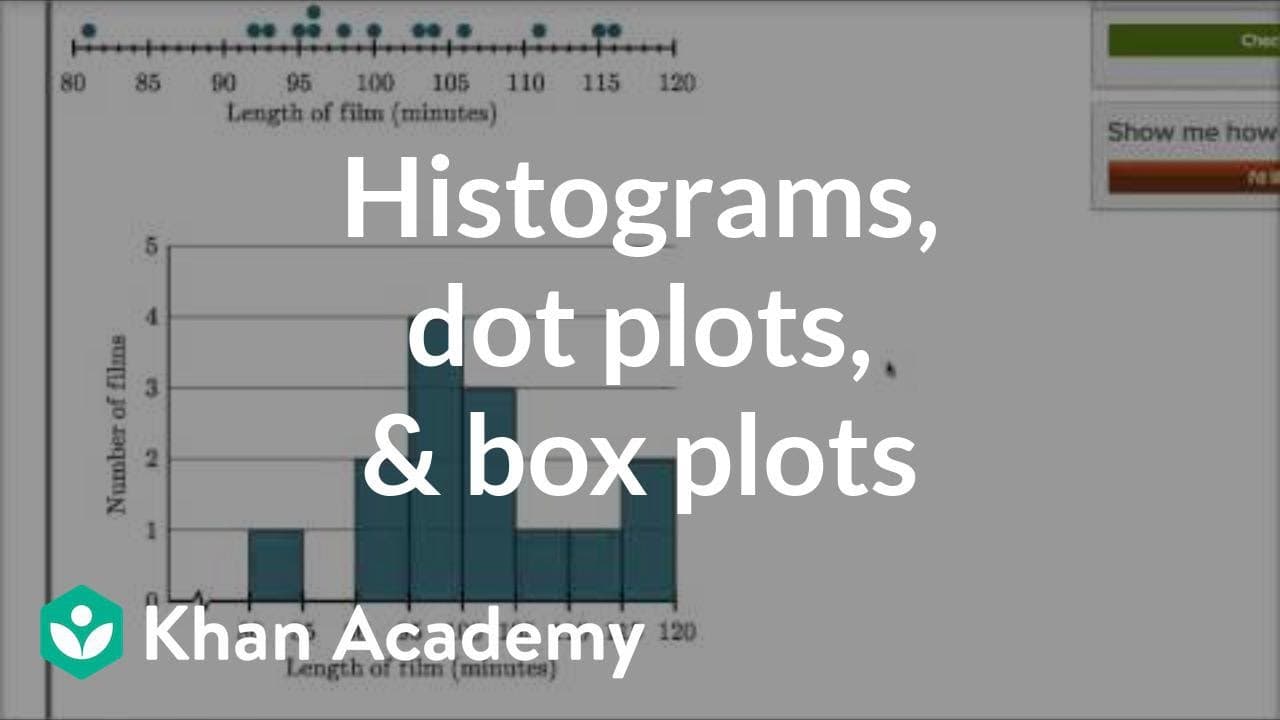
Comparing Dot Plots, Histograms, and Box Plots
Pick the best display and compare two data sets.
Watch on YouTube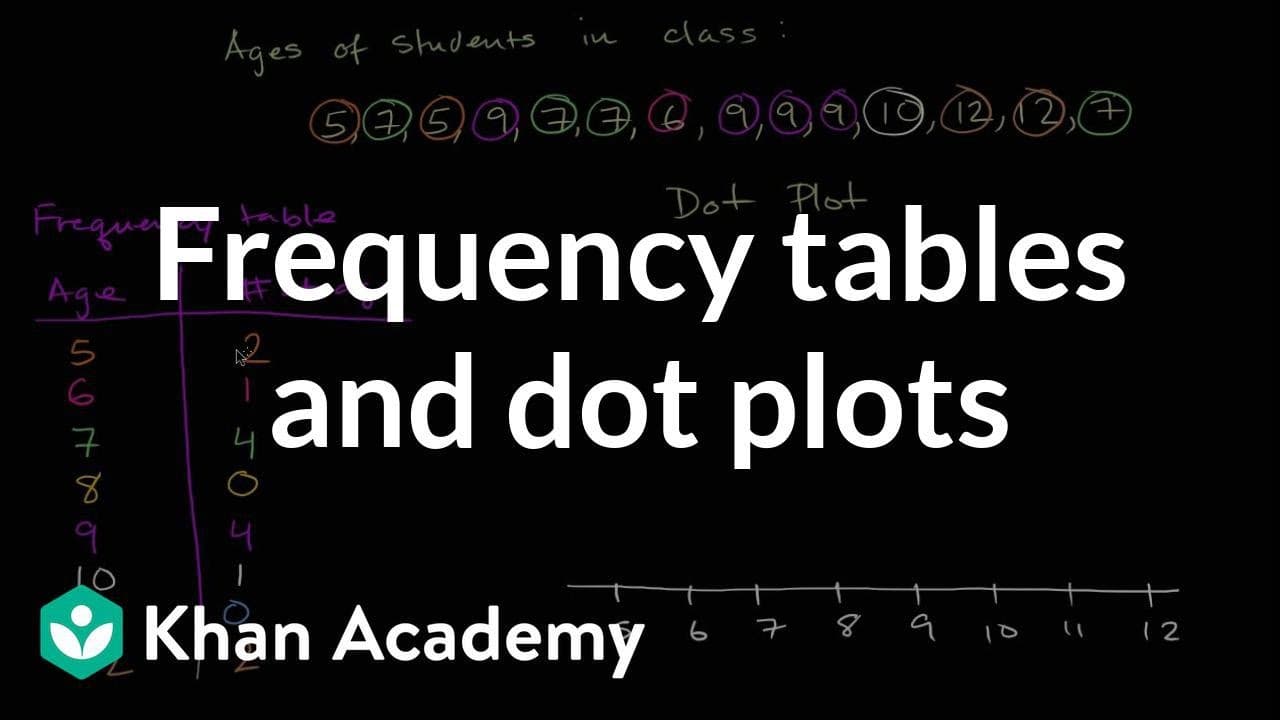
Frequency Tables and Dot Plots
Build dot plots from raw data and read their features.
Watch on YouTubePractice
For each problem: write your work in the box, type your answer, and check it. If you are stuck, reveal the solution one step at a time. Do not skip straight to the final answer.
Exercise 1
Try it yourselfYou surveyed 8 students on how many siblings they have: 0, 1, 1, 2, 2, 2, 3, 4. Which display shows every value clearly?
Step-by-step solution
- 1The data set is small.
- 2A dot plot shows each individual value well.
Exercise 2
Try it yourselfTest scores grouped into intervals 60–69, 70–79, 80–89, 90–100. Which graph shows frequency by interval?
Step-by-step solution
- 1Grouped numeric ranges use bins.
- 2A histogram is the best choice.
Exercise 3
Try it yourselfYou want to compare the spread of homework time for boys vs. girls. Which display helps most?
Step-by-step solution
- 1Comparing two groups' spread suggests five-number summaries.
- 2Side-by-side box plots work well.
Exercise 4
Try it yourselfA pie chart shows favorite colors. Is this good for showing exact counts of a small class survey?
Step-by-step solution
- 1Pie charts show parts of a whole but make exact counts hard to read.
- 2A dot plot or bar graph is better for exact counts in a small set.
Exercise 5
Try it yourselfDaily temperatures for 30 days need to be summarized by week. Name the best display and why.
Step-by-step solution
- 1Grouping many values into ranges (weekly bins) fits a histogram.
- 2Histograms show how many days fell in each temperature interval.
Worksheet - Statistics & data
Mixed practice for center, spread, and data displays.
Quick check
Answer all questions. Retake the quiz until you feel confident before moving on.
Choosing the Right Display
Question 1 of 4
Which display is best for showing the frequency of test-score ranges?