
The lesson
Read each section in order, work through every example on paper, then use the practice problems and quick check at the bottom.
Samples stand in for populations
It's usually impossible to survey everyone, so we study a sample and use it to estimate facts about the whole population.
Random keeps it fair
A random sample gives every member an equal chance of being selected. That keeps the sample representative and reduces bias.
Why this matters
Why a fair, random sample lets you make valid inferences.
These ideas show up on homework, quizzes, and the next unit in this grade. Getting comfortable here saves time later when the problems stack more steps together.
Common mistakes to avoid
Rushing to the answer without writing steps. Clear work helps you catch mistakes and shows your reasoning.
Re-reading the question too quickly. Underline what you are solving for before you start calculating.
Key ideas from this lesson
- Samples stand in for populations
- Random keeps it fair
Video walkthroughs
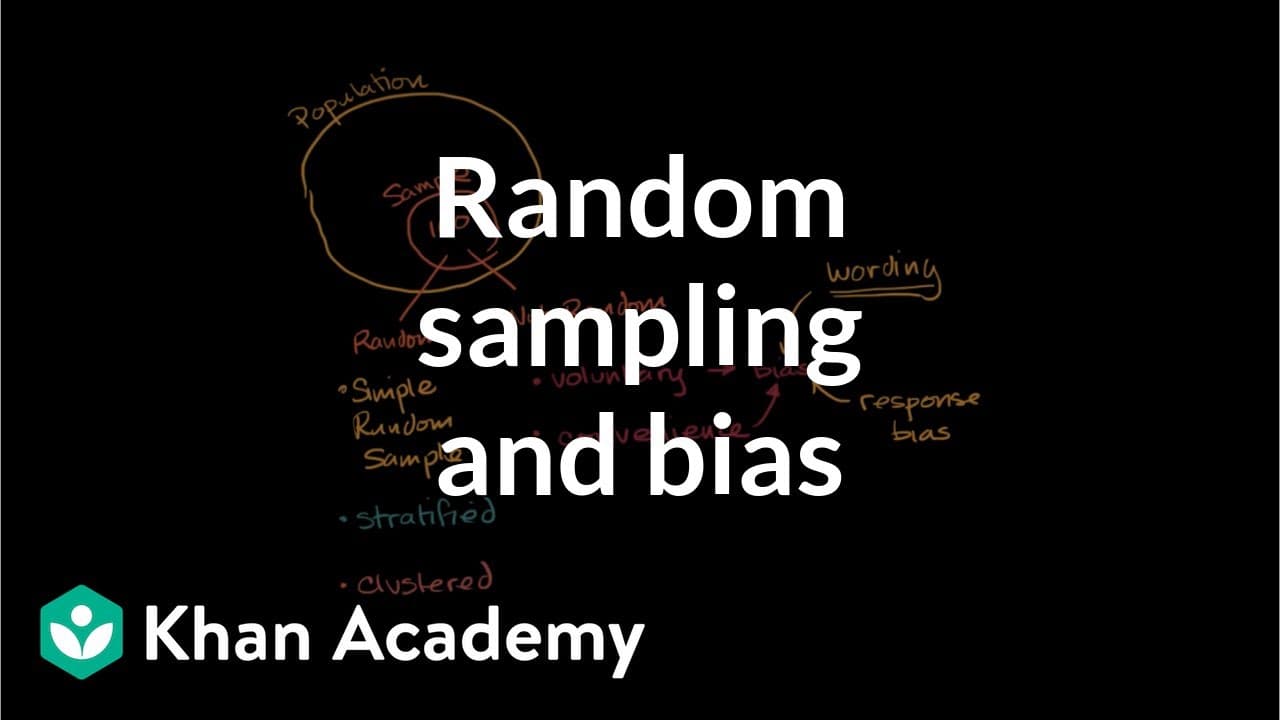
Random Sampling & Avoiding Bias
Techniques for fair sampling and the bias to watch for.
Watch on YouTube
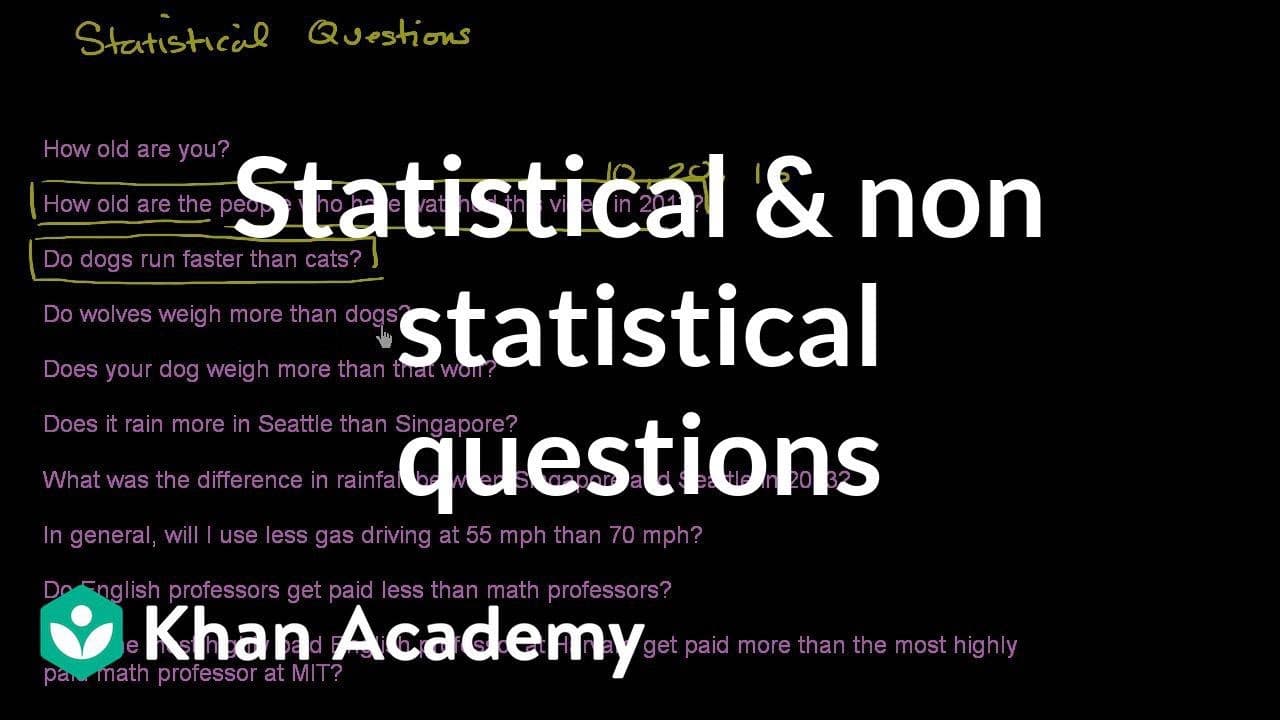
Statistical and Non-Statistical Questions
Decide which questions expect many different answers.
Watch on YouTube
Practice
For each problem: write your work in the box, type your answer, and check it. If you are stuck, reveal the solution one step at a time. Do not skip straight to the final answer.
Exercise 1
Try it yourselfWhy do researchers use a random sample instead of surveying everyone?
Step-by-step solution
- 1Surveying an entire population is often impractical or costly.
- 2A random sample gives every member an equal chance to be chosen.
- 3That makes the sample more likely to represent the population fairly.
Exercise 2
Try it yourselfA poll asks only people leaving a vegan restaurant about favorite foods. Is this sample biased?
Step-by-step solution
- 1The sample is limited to one location and one type of customer.
- 2It does not give all community members an equal chance to be included.
- 3Yes, the sample is biased and may not represent the whole population.
Exercise 3
Try it yourselfA school has 800 students. Name one method to choose a random sample of 40 students.
Step-by-step solution
- 1Assign each student a number from 1 to 800.
- 2Use a random number generator to pick 40 unique numbers.
- 3Include those students in the sample.
Exercise 4
Try it yourselfA survey is very large but only includes eighth graders. Can it still be biased?
Step-by-step solution
- 1Size alone does not fix bias.
- 2If the population is all students K–12, eighth graders alone are not representative.
- 3Yes, excluding other grades creates bias.
Exercise 5
Try it yourselfExplain the difference between a population and a sample.
Step-by-step solution
- 1The population is the entire group you want to learn about.
- 2A sample is a smaller subset actually measured.
- 3We use samples to make inferences about the population.
Quick check
Answer all questions. Retake the quiz until you feel confident before moving on.
Random Sampling
Question 1 of 4
Which sample is most likely to represent all students at a school?