
The lesson
Read each section in order, work through every example on paper, then use the practice problems and quick check at the bottom.
Compare center and spread
To compare two groups, look at a measure of center (mean or median) and a measure of spread (range, IQR, or mean absolute deviation).
Class A has a mean test score of 80; Class B has a mean of 72. Both have similar spread. What can you infer?
- 1The centers differ by 8 points.
- 2Since the spreads are similar, Class A generally scored higher than Class B.
Why this matters
Compare data sets using their centers and how spread out they are.
These ideas show up on homework, quizzes, and the next unit in this grade. Getting comfortable here saves time later when the problems stack more steps together.
Common mistakes to avoid
Rushing to the answer without writing steps. Clear work helps you catch mistakes and shows your reasoning.
Re-reading the question too quickly. Underline what you are solving for before you start calculating.
Key ideas from this lesson
- Compare center and spread
Video walkthroughs
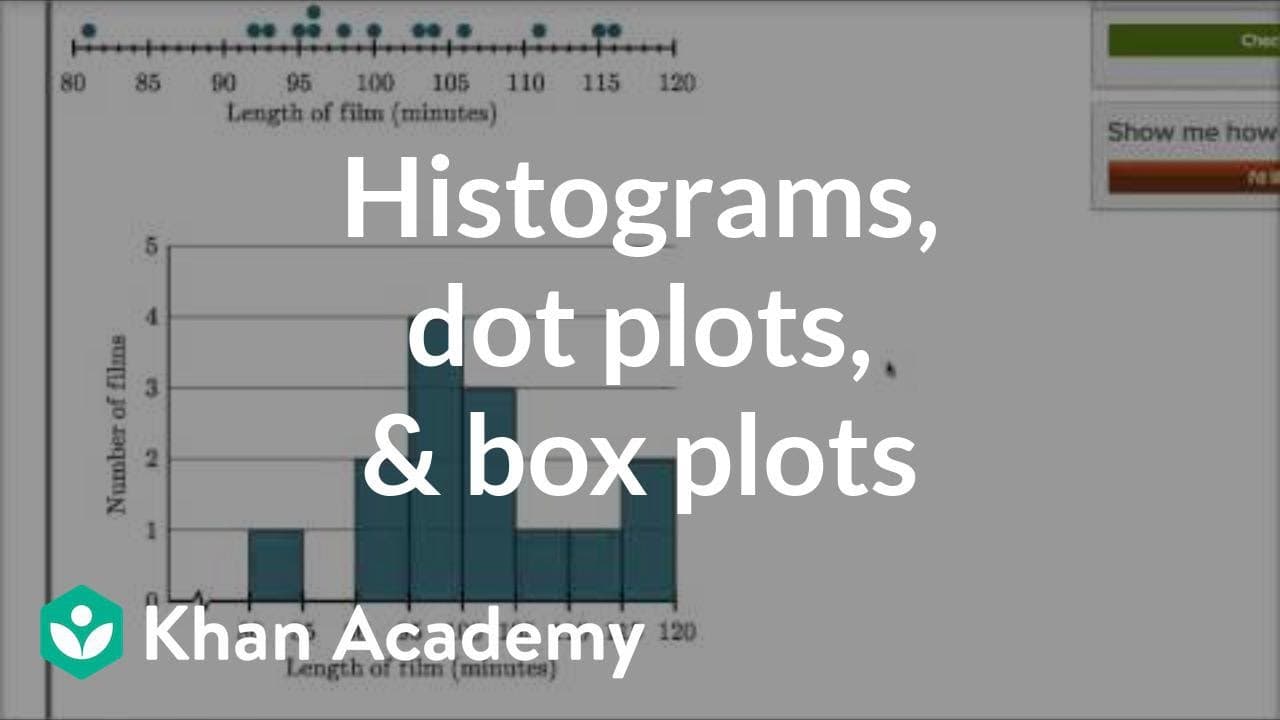
Comparing Dot Plots, Histograms & Box Plots
Pick the right display and compare two data sets.
Watch on YouTube
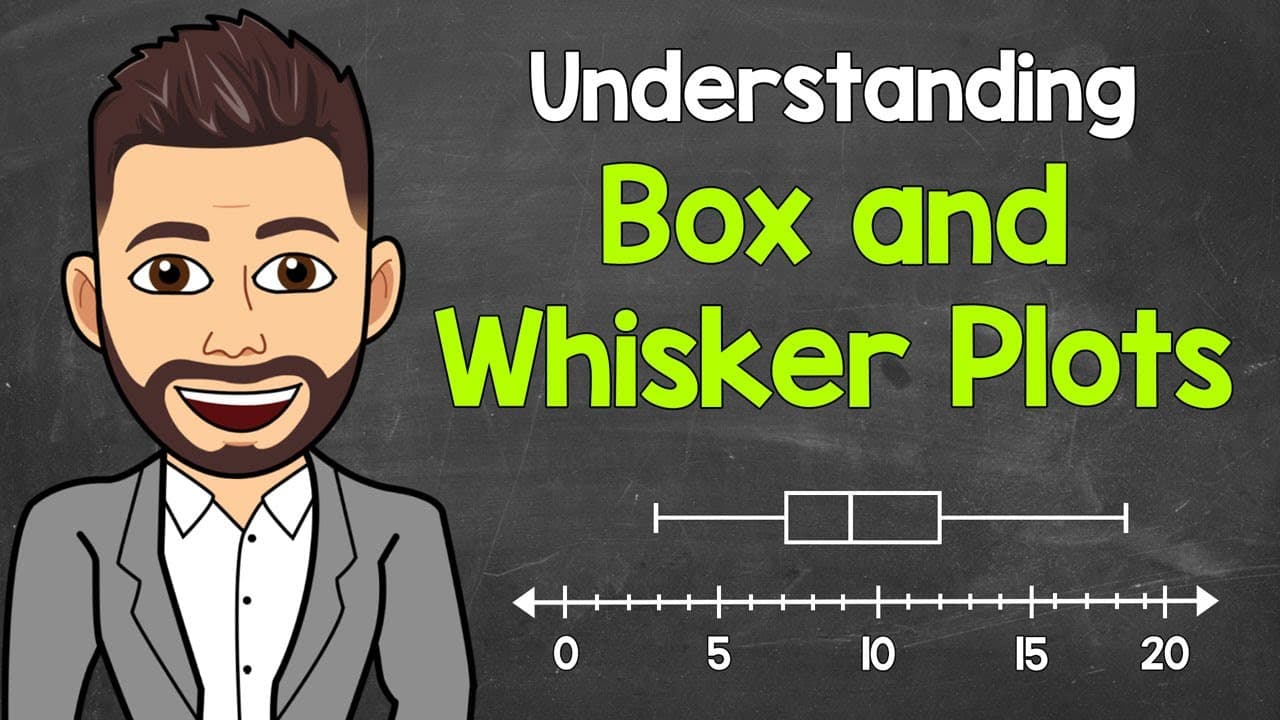
Box and Whisker Plots
Compare spread and center of two data sets with box plots.
Watch on YouTube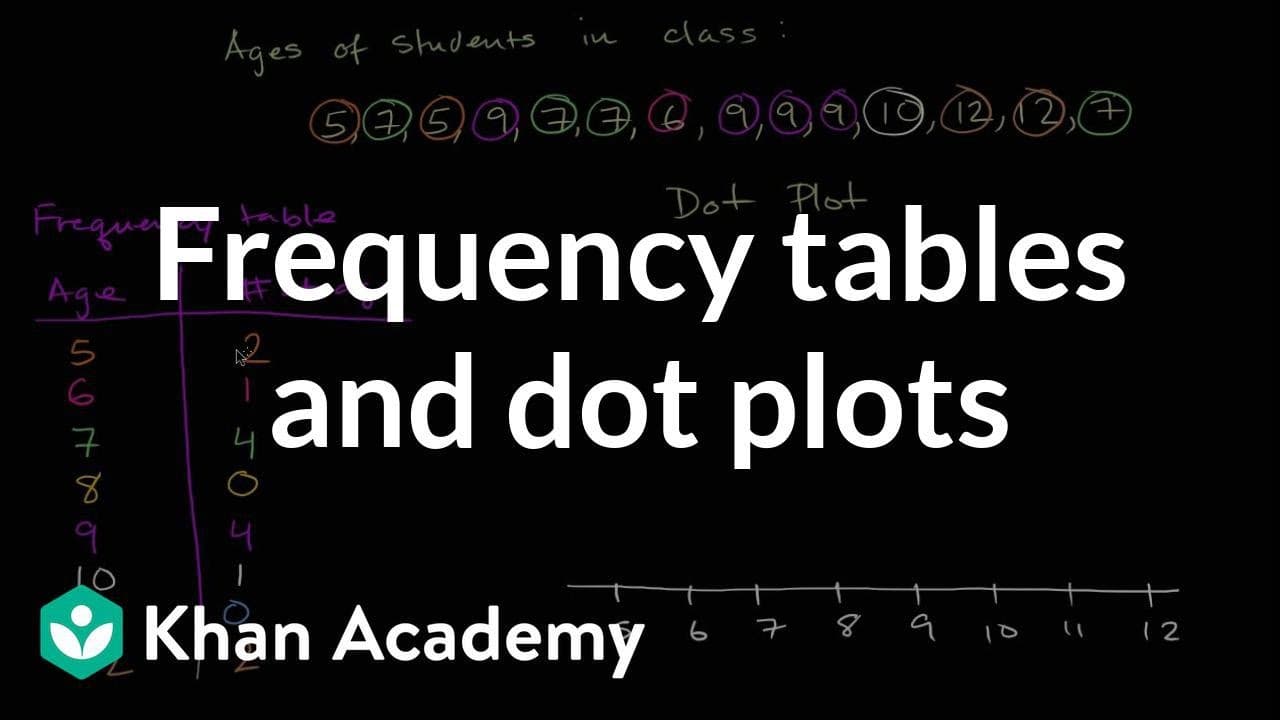
Frequency Tables and Dot Plots
Display and compare small data sets with dot plots.
Watch on YouTubePractice
For each problem: write your work in the box, type your answer, and check it. If you are stuck, reveal the solution one step at a time. Do not skip straight to the final answer.
Exercise 1
Try it yourselfTeam A: mean 72, range 10. Team B: mean 68, range 10. Which team typically scored higher?
Step-by-step solution
- 1Compare centers: 72 > 68.
- 2Spreads are similar, so Team A typically scored higher.
Exercise 2
Try it yourselfData set 1: median 15. Data set 2: median 22. What does this suggest about the typical value?
Step-by-step solution
- 1Median describes the middle typical value.
- 2Data set 2's typical value is about 7 units higher than data set 1's.
Exercise 3
Try it yourselfClass X mean = 85, MAD = 2. Class Y mean = 80, MAD = 12. Which comparison is more reliable?
Step-by-step solution
- 1A 5-point difference with MAD 2 is large relative to spread.
- 2The same 5-point gap with MAD 12 has lots of overlap.
- 3Comparing X and Y is more reliable because the difference is large compared to variability.
Exercise 4
Try it yourselfStore A wait times (min): 4, 5, 6, 5, 5. Store B: 2, 9, 3, 10, 6. Find each mean. Which store is faster on average?
Step-by-step solution
- 1Store A mean: (4+5+6+5+5)/5 = 25/5 = 5 min.
- 2Store B mean: (2+9+3+10+6)/5 = 30/5 = 6 min.
- 3Store A is faster on average (lower mean).
Exercise 5
Try it yourselfTwo dot plots overlap almost completely, but Group 1 has mean 50 and Group 2 has mean 51. Can you confidently say Group 2 is much higher?
Step-by-step solution
- 1A 1-unit difference is small.
- 2Heavy overlap means the groups are very similar.
- 3No, the difference is not large compared to the spread.
Quick check
Answer all questions. Retake the quiz until you feel confident before moving on.
Comparing Two Populations
Question 1 of 4
To compare the typical value of two data sets, which should you compare?