
The lesson
Read each section in order, work through every example on paper, then use the practice problems and quick check at the bottom.
Volume
Volume is how much space fits inside a 3-D shape, measured in cubic units. For a rectangular prism (a box), volume = length × width × height.
Volume measures space inside a 3D object, in cubic units. Think of how many unit cubes would fill the shape.
For prisms, volume is often (area of the base) × (height). The base and height must be perpendicular for that shortcut.
Find the volume of a prism with edges 3, 4, and 5 units.
- 1V = length × width × height.
- 2V = 3 × 4 × 5 = 60 cubic units.
Surface area
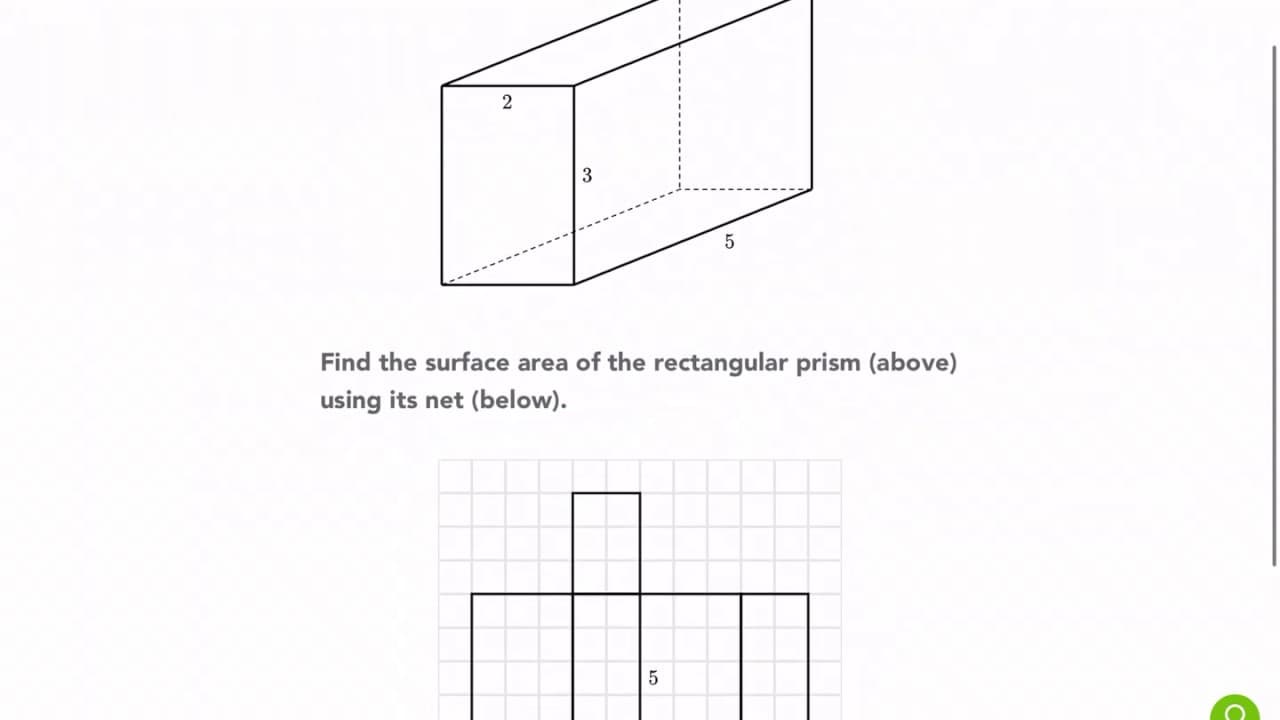
Surface area is the total area of all the faces. Unfold the box into a flat net so you can see and add up every face.
Area measures how much space a flat shape covers, in square units. Picture tiles on a floor. Each tile is one square unit.
Break complicated shapes into rectangles or triangles you already know how to measure, then add the pieces together.
Why this matters
Volume fills the inside; surface area covers the outside.
These ideas show up on homework, quizzes, and the next unit in this grade. Getting comfortable here saves time later when the problems stack more steps together.
Common mistakes to avoid
Rushing to the answer without writing steps. Clear work helps you catch mistakes and shows your reasoning.
Re-reading the question too quickly. Underline what you are solving for before you start calculating.
Key ideas from this lesson
- Volume
- Surface area
Video walkthroughs
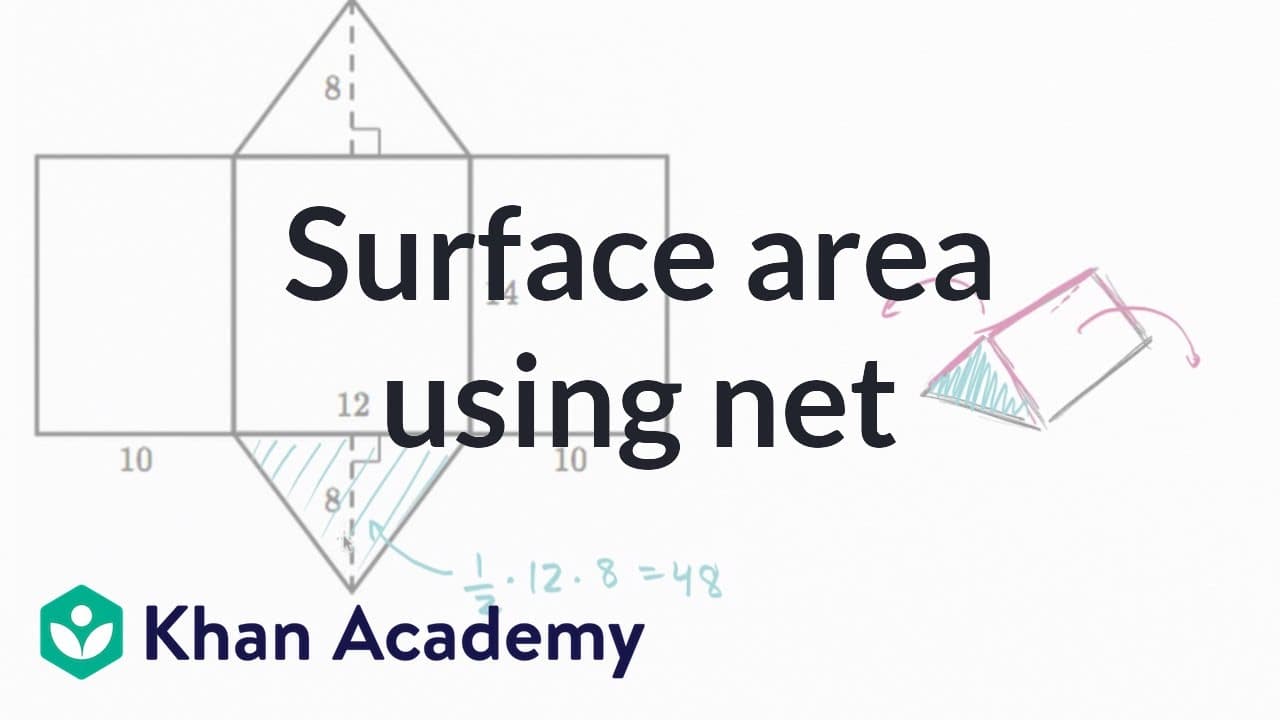
Surface Area Using Nets
Unfold a 3-D figure and add the areas of each face.
Watch on YouTube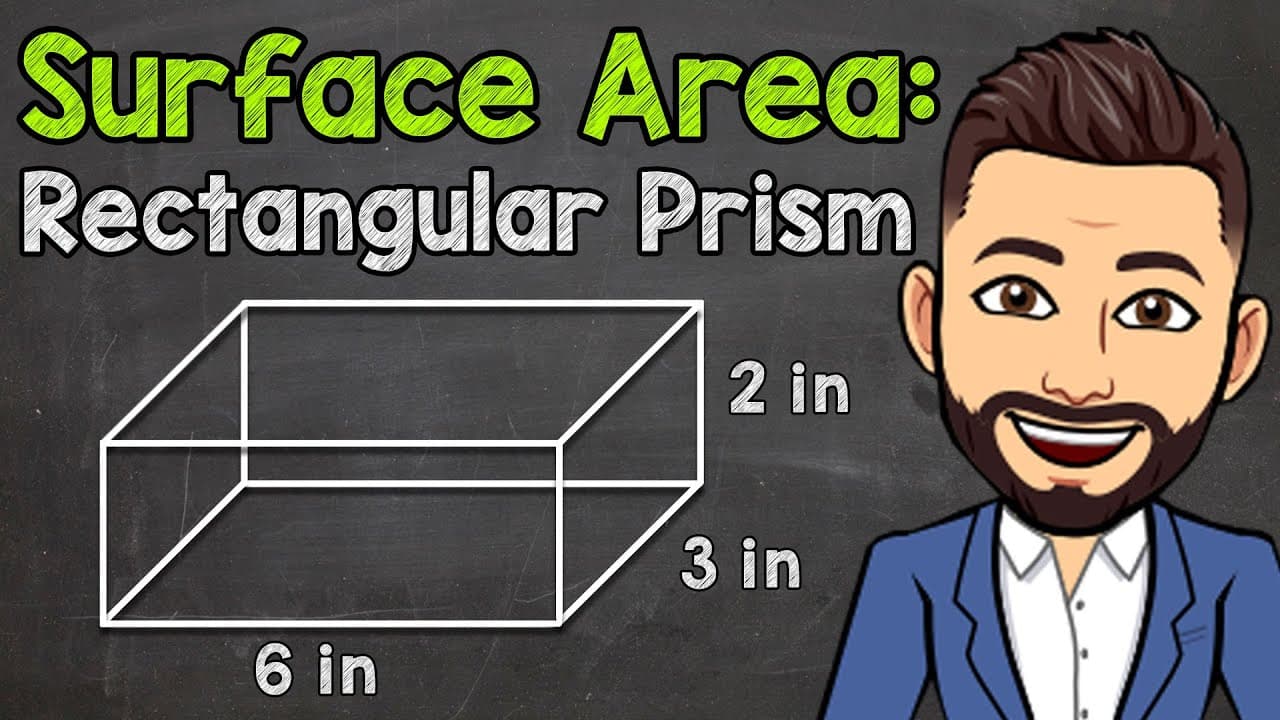
Surface Area of a Rectangular Prism
Find total face area step by step using a net.
Watch on YouTubePractice
For each problem: write your work in the box, type your answer, and check it. If you are stuck, reveal the solution one step at a time. Do not skip straight to the final answer.
Exercise 1
Try it yourselfFind the volume of a rectangular prism 6 cm × 4 cm × 3 cm.
Step-by-step solution
- 1V = length × width × height.
- 2V = 6 × 4 × 3 = 72 cm³.
Exercise 2
Try it yourselfA box is 5 in × 5 in × 2 in. Find its volume.
Step-by-step solution
- 1V = 5 × 5 × 2 = 50 in³.
Exercise 3
Try it yourselfA cube has edge length 4 cm. Find its volume and surface area.
Step-by-step solution
- 1Volume: 4³ = 64 cm³.
- 2One face: 4 × 4 = 16 cm². Six faces: 6 × 16 = 96 cm².
Exercise 4
Try it yourselfA prism has volume 120 m³. The base is 10 m². Find the height.
Step-by-step solution
- 1V = base area × height.
- 2120 = 10 × h → h = 12 m.
Exercise 5
Try it yourselfAn open-top box (no lid) is 8 cm × 5 cm × 3 cm. Find the surface area of the material needed.
Step-by-step solution
- 1Bottom: 8 × 5 = 40.
- 2Sides: 2(8×3) + 2(5×3) = 48 + 30 = 78.
- 3Total: 40 + 78 = 118 cm².
Quick check
Answer all questions. Retake the quiz until you feel confident before moving on.
Surface Area & Volume
Question 1 of 5
Find the volume of a rectangular prism with edges 3, 4, and 5 units.